
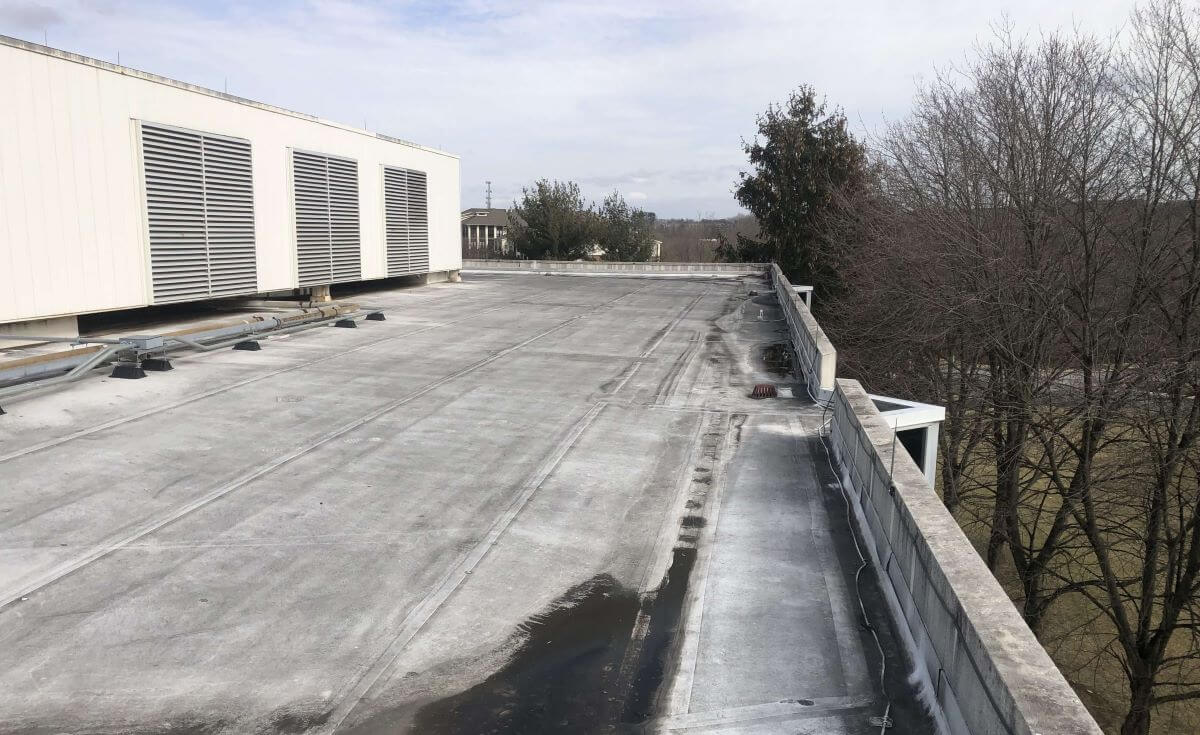
Healthcare Facility Roofing in Wichita, KS in Wichita, KS
Commercial roofing for hospitals, medical offices, clinics, and healthcare facilities.
Wichita sits squarely in Tornado Alley, and healthcare facilities here must be built and maintained to remain operational through the severe weather events that strike the city and surrounding Sedgwick County multiple times each year. The May 2012 tornado that tracked near the Oaklawn neighborhood was a reminder that even well-built commercial structures face wind loads that can strip inadequately fastened roofing systems. Our membrane installations for Wichita hospitals and medical centers use enhanced perimeter fastening schedules and tested uplift-rated assemblies to maintain building envelope integrity during high-wind events. Post-storm rapid assessment protocols are activated after any tornado warning affecting the Wichita metro, prioritizing healthcare facilities where clinical continuity depends on a dry, intact roof.
The thermal extremes of Wichita's Continental climate place unusual stress on commercial roofing membranes. Summer surface temperatures on dark-colored or aged rooftops can exceed 170°F on the south slope, while January lows routinely drop below zero. This 170-plus-degree annual temperature range causes membrane expansion and contraction cycles that stress seams, flashings, and penetration details with every passing season. Reflective TPO systems are increasingly the specification of choice for Wichita healthcare facilities both for their thermal cycling resilience and for the cooling load reduction they provide to buildings like Wesley Medical Center, which runs energy-intensive surgical suite HVAC systems around the clock.
Infection control compliance during roofing construction at Wichita healthcare facilities is governed by both The Joint Commission standards and KDHE (Kansas Department of Health and Environment) facility licensing requirements. Dust and particulate generated during tear-off of old roofing materials can reach patient care areas through HVAC intakes if containment measures are not rigorously enforced. We prepare written Infection Control Risk Assessments for all Category III and IV projects, erect HEPA-barrier systems at intake locations, and schedule demolition phases outside of peak clinical hours when procedure schedules allow. Compliance documentation is submitted to the facility's safety officer before work begins and archived with the project record.
Urgent care expansion across Wichita has been dramatic, with new standalone clinics appearing in the Andover, Derby, and Maize corridors serving the suburbs that have grown around the city's aerospace and manufacturing economy. These facilities, while smaller than acute care hospitals, treat patients with acute injury and illness in environments where a dripping ceiling above a treatment bay is both a liability and a patient confidence issue. Their rooftops commonly feature TPO systems on metal decks with spans of 30 to 40 feet between structural supports — assemblies that require careful attention to deck deflection under load and proper fastener selection to prevent membrane stress over time.
Assisted living communities in Wichita have multiplied along the East Kellogg Avenue and North Rock Road corridors as the city's retirement-age population has grown. These facilities are licensed by KDHE under the Assisted Living facility regulations, which include physical plant maintenance standards. A rooftop inspection and maintenance program that generates written records is among the best investments an assisted living operator can make before a state survey visit. A proactive maintenance record demonstrates that facility leadership is managing the building systematically, reducing the likelihood of a citation for deferred maintenance. Our maintenance agreements provide the documentation infrastructure these operators need.
Hail is an underappreciated roofing threat at Wichita healthcare facilities. Sedgwick County ranks among the highest-frequency large-hail corridors in the United States, and golf-ball-size hail events occur at least once or twice per decade in the immediate metro area. Hail impact causes membrane dimpling and puncture on both TPO and modified bitumen systems, and the damage is often not visible from ground level or even close inspection without knowing what to look for. Following any hail event of one inch or greater, we conduct rooftop assessments at enrolled healthcare clients using moisture detection meters and detailed photographic documentation to support insurance claims and identify repairs needed before the next rain event.
- Roof Coatings Restoration
- Hail Damage Roof Restoration
- Architectural Sheet Metal
- Multifamily Roofing
- Solar Roof Integration
- Standing Seam Metal Roofing
- Cool Roof Installation
- University Campus Roofing
Roof questions this work should answer
Where is the roof vulnerable?
Drainage, seams, curbs, edge metal, penetrations, traffic paths, and prior repairs should be clear enough to guide the next step.
What has to happen first?
Active water entry, tenant protection, safe access, and storm documentation are handled before long-range pricing is finalized.
How should ownership compare options?
Repair, coating, recover, and replacement choices should be compared against roof age, wet insulation, building use, and the cost of future disruption.