
Drone & Infrared Roof Inspection in Wichita, KS in Wichita, KS
Aerial and Thermal Roof Inspection Across Wichita
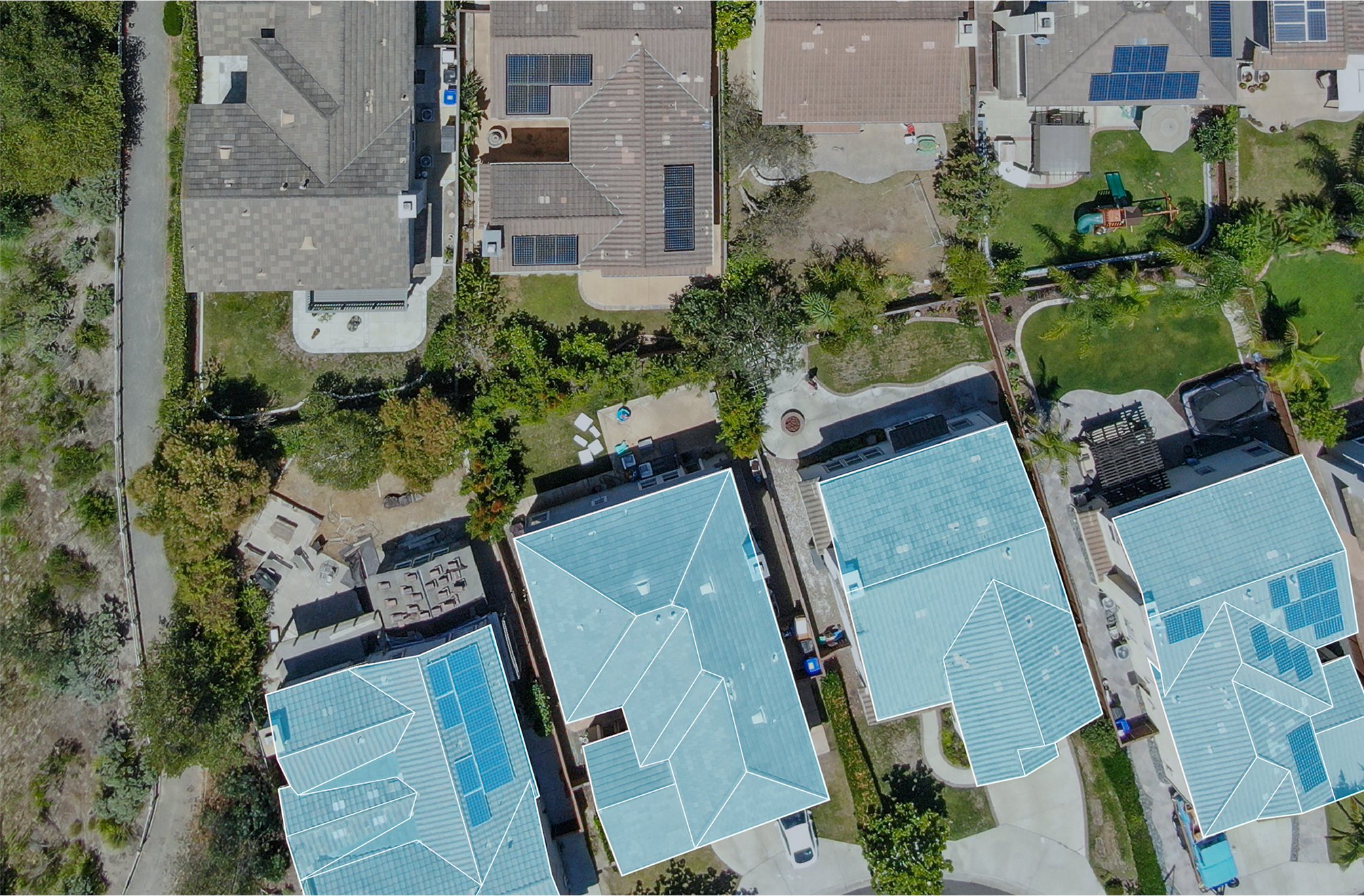
On a roof the size of a distribution center, the leak almost never shows up where the water gets in. Moisture slips past a seam, runs laterally under the membrane, soaks into the insulation, and surfaces as a drip twenty or thirty feet from the actual breach. Tracking that down on foot is slow, it puts crew weight on a membrane that may already be failing, and across a roof measured in acres it simply misses things. So we fly these roofs. A drone carrying a high-resolution camera and a radiometric thermal sensor reads an entire manufacturing rooftop near the Textron Aviation and Cessna facilities, or a multi-building retail center along East Kellogg, in a fraction of the time a walking survey would take, and it sees what nobody standing on the surface can.
Roofs in Wichita earn their wear. Spring delivers the hail and straight-line wind Sedgwick County is famous for, summer heat drives the thermal cycling that works seams open, and a continental Kansas winter pushes freeze-thaw moisture deeper into any assembly that has already let water past. All of that is an argument for inspecting roofs often instead of waiting for the ceiling stain, and flying them is what makes frequent inspection actually affordable.
How Infrared Reveals Trapped Moisture
The heart of a thermal flight is moisture mapping, and it works on a simple thermal principle. Through the day the roof soaks up solar heat. After sunset the dry areas shed that heat quickly and cool off, while any spot where water has saturated the insulation holds its heat far longer, because water carries much more thermal mass than dry board. Our radiometric camera reads that lingering warmth as a bright, well-defined signature against the cooled membrane, so a flight flown in the right evening window traces the exact footprint of moisture trapped inside the assembly even when the membrane above it looks perfectly sound from the surface.
That one piece of information reshapes the entire repair decision. If the wet zone is small and isolated, we can specify a targeted cut-and-patch and protect the rest of the roof. If the scan shows saturation spread across a large share of the field, surface patching is throwing money away and the assembly needs replacement. Without the scan, an owner is guessing, and guessing on a commercial roof costs money in both directions: replacing a roof that only needed a repair, or repairing one that is already gone.
What the Visual Pass Documents
Alongside the thermal data, the high-resolution camera captures the conditions that drive condition reports and capital budgets: seam separation, membrane shrinkage and ridging, ponding water and the failed drainage behind it, cracked penetration and curb flashings, punctured or displaced membrane after a storm, and the state of every rooftop equipment support. On a hail or wind claim, that imagery is the evidence. We tag each finding to its location on the roof so an owner, an adjuster, or a facilities manager can see exactly where a defect sits without anyone setting foot on a ladder.
Why Keep People Off the Membrane
Every step a person takes on a roof is a small impact, and on an aged or already-leaking membrane that foot traffic can push a marginal area into outright failure. It is also a genuine safety exposure on roofs dotted with skylights, soft decking, or unguarded edges. A drone gathers more data than a walking inspector while keeping crew off the very surface whose load-bearing condition is in question. For the largest roofs across Wichita's logistics and aviation-manufacturing corridors, that is not a convenience, it is the only practical way to cover the whole thing.
Flown Legally and Flown Safely
Commercial drone work is regulated, and we run it that way. Every flight is conducted under FAA Part 107 with a certified remote pilot in command, the aircraft stays within visual line of sight, and we clear the airspace before each job. That airspace check carries real weight in this city: Wichita sits beneath and around controlled airspace tied to Dwight D. Eisenhower National Airport, plus the dense general-aviation and flight-test traffic that earned the region its name as the Air Capital of the World. Where a property falls inside that controlled airspace, we secure the required authorization before we launch. We also coordinate with the site to keep people clear of the flight area and confirm no temporary flight restrictions are active, which matters most in the days right after major storms when post-event flying demand spikes.
- Radiometric thermal moisture mapping flown in the correct post-sunset window for reliable contrast
- High-resolution visual documentation of seams, flashings, drainage, and storm damage
- Findings tagged to roof location so repairs and budgets target the real problem areas
- Full-coverage assessment of large low-slope roofs without loading the membrane with crew weight
- FAA Part 107 flights with controlled-airspace authorization around Wichita's heavy airport traffic
When an Aerial Inspection Pays for Itself
Drone inspection earns its keep on any commercial roof past roughly ten thousand square feet, on multi-building campuses, and any time a roof needs fast, defensible documentation. We use it to baseline a roof before a maintenance program starts, to scope a reroof so the construction drawings reflect real conditions instead of assumptions, to back an insurance claim after hail or wind, and to verify a roof's condition during a property acquisition before money changes hands. Smaller or steeply pitched roofs are often quicker to inspect by hand, and we will tell you when that is the case rather than flying for the sake of billing a flight.
If you own or manage commercial property anywhere across Wichita, from the warehouse districts off I- and through downtown, an aerial and thermal inspection hands you a clear, documented picture of what you are dealing with before you spend a dollar on repairs. We deliver the imagery and the moisture map, then sit down and walk you through what it actually means for your building.
Roof questions this work should answer
Where is the roof vulnerable?
Drainage, seams, curbs, edge metal, penetrations, traffic paths, and prior repairs should be clear enough to guide the next step.
What has to happen first?
Active water entry, tenant protection, safe access, and storm documentation are handled before long-range pricing is finalized.
How should ownership compare options?
Repair, coating, recover, and replacement choices should be compared against roof age, wet insulation, building use, and the cost of future disruption.