
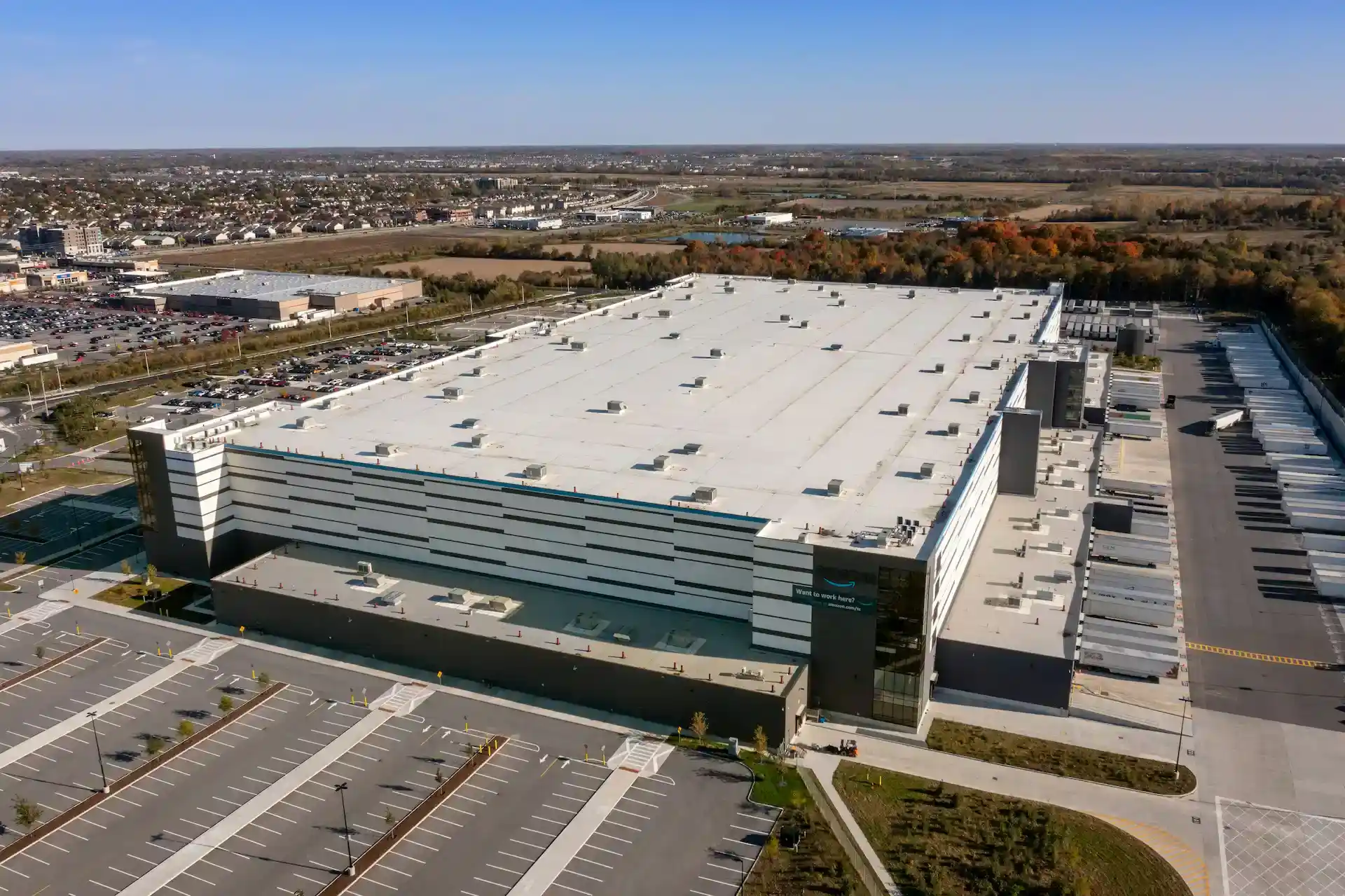
Industrial Flex Space Roofing in Wichita, KS in Wichita, KS
Roofing the Hardest-Working, Hardest-to-Pin-Down Buildings in Wichita
Flex space is the chameleon of the commercial market. One building might hold a light manufacturer in the back, a contractor's shop in the middle, and a tech firm's lab and office up front, then turn over to a completely different mix at the next lease cycle. The roof has to perform through all of it: changing occupancies, tenant build-outs, and the full spread of rooftop loads that come with industrial tenants. We roof flex buildings in Wichita knowing the use will change, so the system and the detailing have to be ready for whatever moves in next.
Wichita has a deep inventory of these buildings. The flex and light-industrial parks along the I-135 and South Broadway corridors, the business parks near Eisenhower National Airport on the southwest side, and the older industrial stock around the rail spurs on the near south and west sides run the gamut from 1970s tilt-wall with aging built-up roofs to modern pre-engineered metal buildings with standing seam. Each generation of construction wants a different reroof approach, and that is the first thing we sort out on a walk.
Penetrations Nobody Wrote Down
The defining roofing problem on multi-tenant flex is the penetration history. Every tenant improvement over the years tends to add a rooftop HVAC unit, punch the membrane for new electrical or refrigerant lines, or drop equipment on a roof that was never load-planned for it, and most of those changes never make it into the property records. That is why a flex reroof in Wichita always starts with a penetration inventory. We photograph and map every curb, vent, and conduit, compare it to the original drawings when they exist, and flag the non-standard or badly sealed penetrations that have to be fixed before new membrane goes down.
- Full rooftop penetration survey before any tear-off, so undocumented tenant work cannot become a leak or a warranty fight later.
- Improperly sealed or abandoned penetrations remediated, not buried under new membrane.
- Drain and scupper layout checked across every bay, since flex roofs collect debris and ponding around years of added equipment.
Coordinating a Roof Over Many Tenants at Once
A single-user industrial building has one schedule. A multi-tenant flex building has as many schedules as it has bays, and that is a coordination job before it is a roofing job. We start from a bay-by-bay occupancy map and lease-contact list from property management, then identify which tenants have live rooftop equipment, which bays sit vacant, and which tenants are sensitive to noise or to any HVAC downtime during the work. Sequencing and daily dry-in run through the property manager, tenants get advance notice through that channel, and the crew is not fielding side requests from a dozen different businesses.
Vacancy Is a Roofing Risk Most Owners Miss
Lease transitions are where flex roofs quietly fail. When a tenant leaves and their rooftop units come off, the open curbs are often capped with temporary protection that does not survive more than a rain event or two, and a vacant bay collects debris and clogs drains faster than an occupied one. For owners and investors carrying flex space through turnover, our inspections specifically confirm curb-cap status, verify that the departed tenant's penetrations are properly sealed, and check that the drainage is clear so an empty bay is not the source of the next water-damage claim.
Matching the System to the Building
For the older tilt-wall and concrete flex stock, 60-mil TPO mechanically attached over tapered polyiso is the workhorse specification, cost-effective and durable. Where a building carries heavy rooftop equipment density or constant foot traffic from multiple tenants' HVAC contractors, 80-mil TPO or 60-mil PVC fully adhered earns its higher cost in puncture and traffic resistance.
Pre-Engineered Metal Buildings
The newer pre-engineered metal flex buildings with standing seam or R-panel roofs call for a different decision. Depending on panel condition, purlin spacing, and load capacity, a silicone-coated metal restoration or a retrofit standing seam recover can extend the roof's service life without a full tear-off. We evaluate recover against replacement honestly and install both approaches in Wichita.
Hail, Wind, and the Owner's Operating Math
Flex buildings get the full south-central Kansas weather menu, and the economics of how you respond fall on the owner, not the tenants. Spring hail splits aging membrane, straight-line winds test the edge metal and fastening on a wide low-slope roof, and summer heat bakes a dark or worn surface until the cooling load shows up in every tenant's utility complaint. For an owner carrying a flex building as an investment, those are operating-cost questions. A reflective white membrane cuts the rooftop heat load across the whole building, which matters when multiple tenants are each running their own HVAC off that roof. A membrane thickness rated for this region's hail costs a little more up front and saves the repeated patch calls and insurance friction that thin membrane invites. We design the wind uplift to the building's real exposure and document hail damage after major storms so the claim is clean and the small bruises get addressed before they open up.
Budgeting a Reroof on an Income Property
A flex building has to keep cash-flowing while its roof gets fixed, so we plan the work to fit the building's economics. Where the assembly is sound, a recover or a coating can extend service life for years at a fraction of a full tear-off, which keeps the capital event smaller and the tenants undisturbed. Where the deck or insulation is failing, a phased replacement spreads the work and the cost across bays and seasons instead of forcing one large hit. We pull a core where it is warranted so the recommendation is grounded in what the assembly is actually doing, and for owners running several flex properties we sequence the portfolio so the worst roofs get addressed first and the capital plan stretches sensibly across the buildings. Wichita's flex inventory spans enough construction eras that no two buildings are on the same clock, and the budgeting should reflect that.
Warranty Coordination Across Tenants and Time
Flex ownership often changes hands, and so do the tenants, which makes warranty clarity worth real money. We register the manufacturer warranty cleanly, document the as-built penetration map at closeout, and set expectations on how future tenant build-outs should tie into the roof so a later HVAC install does not void coverage. For portfolio owners running several flex properties, we deliver standardized condition reports that line up across the buildings and feed straight into capital planning.
Plan a Flex Building Reroof in Wichita
Whether you own a single multi-tenant building near the airport or a portfolio of flex properties across the metro, we will walk the roof, inventory every penetration, check the drainage and any vacant bays, and put a fixed-price scope and a clean warranty plan in front of you, built for a building whose tenants and uses will keep changing under the same roof.
Roof questions this work should answer
Where is the roof vulnerable?
Drainage, seams, curbs, edge metal, penetrations, traffic paths, and prior repairs should be clear enough to guide the next step.
What has to happen first?
Active water entry, tenant protection, safe access, and storm documentation are handled before long-range pricing is finalized.
How should ownership compare options?
Repair, coating, recover, and replacement choices should be compared against roof age, wet insulation, building use, and the cost of future disruption.