
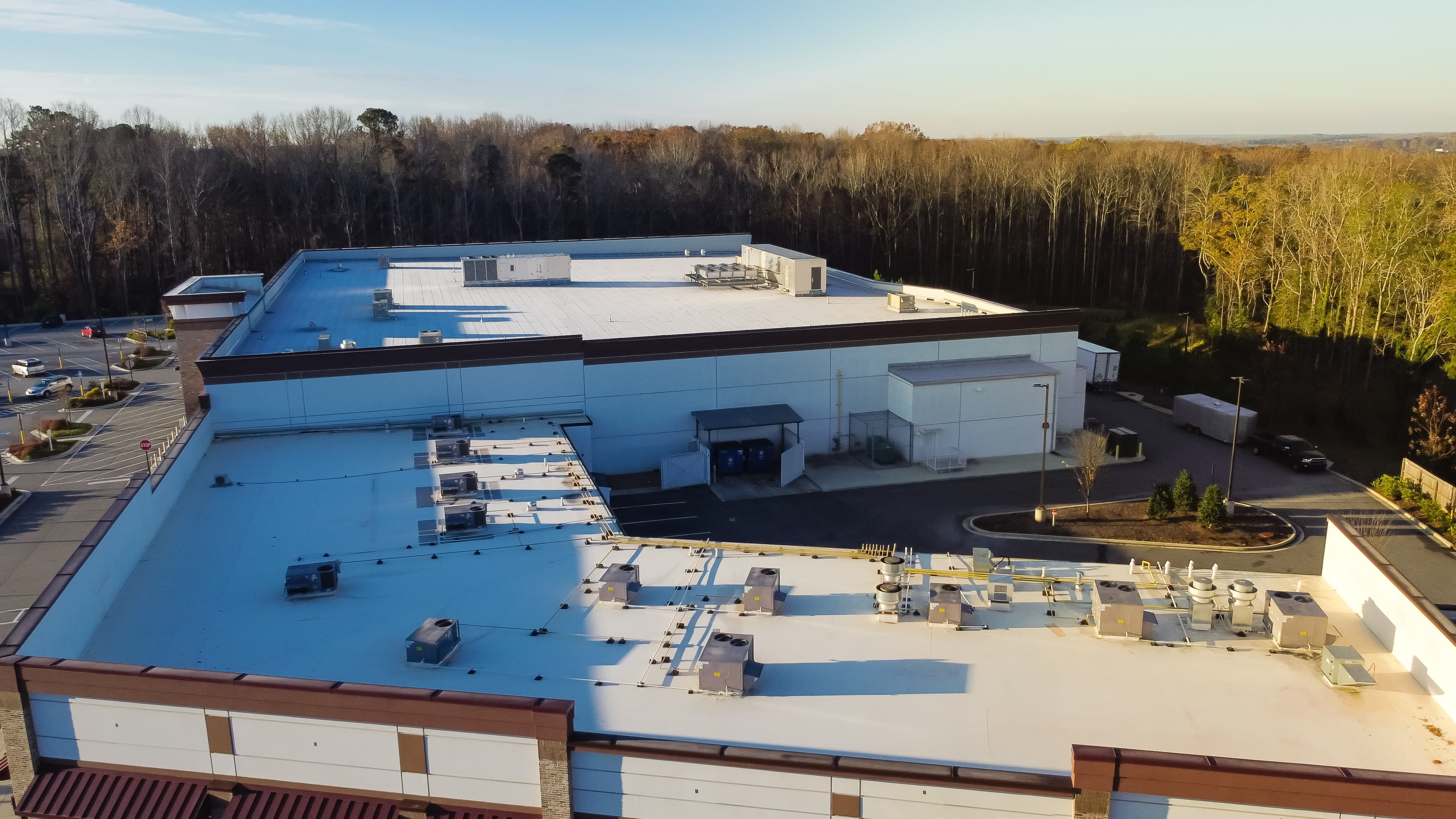
DST Roofing Services in Wichita, KS in Wichita, KS
Commercial roofing for Delaware Statutory Trust properties and 1031 exchange investment portfolios.
Delaware Statutory Trust sponsors assembling NNN commercial portfolios in the Wichita market are working in a secondary Kansas market where the yield premium over primary metros attracts exchange capital but where the roofing risk profile is underestimated with regularity by sponsors who treat all secondary Great Plains markets as interchangeable. Wichita sits at the intersection of two of the most active severe weather corridors in North America — the central Great Plains hail alley and the Kansas tornado belt — and the cumulative effect of annual severe weather exposure on commercial roof systems in Sedgwick County is material and consistent. DST offering memorandums for Wichita assets that do not specifically address hail and wind exposure in the reserve model are presenting an incomplete risk picture to passive investors and their registered investment advisors.
Hail in Wichita is not a rare event requiring a special reserve line item — it is a recurring annual cost driver that should be treated as a baseline operating assumption in any Wichita commercial property financial model. Sedgwick County experiences multiple significant hail events in most years, with the spring severe weather season from March through June consistently producing large-diameter hail that causes impact damage to single-ply membrane systems. Over a five-to-ten-year DST hold period, a Wichita commercial property may experience three to five hail events significant enough to require professional inspection and potentially require membrane repair or section replacement. A pre-acquisition inspection that documents the roof's current hail impact history — how many prior events have affected the membrane and what repair work has been done — gives the DST sponsor the starting baseline from which the offering memorandum's storm-damage reserve should be calculated.
The 1031 exchange identification window creates the same compressed due diligence pressure in Wichita that it does everywhere else, but the hail-specific inspection requirements for Wichita mean that the inspection scope must be explicitly defined when engaging a local contractor. Not all commercial roofing contractors approach hail impact assessment with the same rigor. The inspection should include close visual examination of membrane surface texture in multiple locations across the roof area, documentation of any impact patterns using photographic evidence, probing of suspect areas to assess whether impact points have compromised membrane integrity, and a review of building permit records for any roof repairs that might indicate prior storm damage claims. This scope takes more time than a visual walkthrough inspection, and the timeline implications should be factored into the 1031 identification window planning.
Tornado risk in Wichita adds a wind exposure dimension to roofing due diligence that compounds the hail assessment. While direct tornado strikes on commercial buildings are statistically uncommon, the straight-line winds that accompany Wichita-area severe thunderstorms can approach or exceed 80 miles per hour without the formation of a documented tornado. At those wind speeds, edge metal that is not adequately fastened, parapet sections with compromised mortar joints, and coping caps that have loosened over time can fail in ways that are both sudden and structurally significant. A pre-acquisition inspection for a Wichita commercial building should include specific parapet assessment, coping cap fastening verification, and an evaluation of edge metal attachment patterns — conditions that determine how the building will perform during the next severe storm event, not just how it performed in the past.
NNN lease structures in Wichita DST portfolios divide roofing cost obligations between tenants and landlords in ways that can create complexity when storm damage occurs. The landlord's obligation for the roof structural components and for capital replacement is typically clear under standard NNN lease forms. The ambiguity arises when storm damage is significant enough to warrant insurance claim but not significant enough to justify full replacement — a partial membrane repair that spans several thousand square feet may be characterized differently by the landlord, the tenant, and the insurance adjuster, and the baseline condition documentation from the pre-acquisition inspection is the factual anchor that resolves those characterization disputes. Asset managers who lack that baseline documentation are negotiating storm damage costs from a weaker position.
Wichita's commercial real estate market has significant concentration in the aerospace-adjacent industrial and office sectors — the city is a major center for aircraft manufacturing and maintenance, with Boeing, Textron Aviation, and Spirit AeroSystems among the employers whose supply chain and service providers occupy commercial space throughout Sedgwick County. DST sponsors acquiring industrial and office assets in Wichita's aerospace corridor are acquiring properties with sophisticated commercial tenants who have facility management standards that match their operational precision. An aerospace-sector tenant who discovers a roof leak affecting their assembly or storage operations will document the event formally, quantify the operational impact, and present the landlord with a detailed demand — not an informal maintenance request. Pre-acquisition inspection quality and hold-period maintenance consistency are the operational foundations for meeting these tenant expectations throughout the hold period.
Reserve modeling for Wichita DST offerings must also account for the local commercial roofing insurance market, which has become more restrictive and expensive in recent years as insurers have responded to the Great Plains hail claims history. Commercial property insurance in Wichita now commonly includes roof-specific deductibles, ACV replacement provisions for older roof systems rather than replacement cost coverage, and exclusions for certain roof types or ages that affect the practical coverage available after a major hail event. DST offering memorandums should represent the actual insurance terms obtainable for the specific assets in the portfolio — not theoretical best-case coverage — and the reserve model should include a self-insured retention figure that reflects the deductible and coverage limitation structure that applies to the specific roof systems being acquired.
Hold period maintenance for Wichita DST assets should follow a calendar that accounts for the severe weather season cycle. A pre-season inspection in February or early March — before the first major hail events typically arrive — establishes the roof's baseline condition for the year and identifies any winter damage that should be repaired before spring storms. A post-season inspection in July, after the most active severe weather period, documents any storm damage that occurred and prioritizes repairs before the summer heat and UV cycle stresses the membrane further. This two-inspection-per-year protocol is a modest cost relative to the risk management value it provides, and it should be specified in the asset management agreement and budgeted in the operating expense projections in the DST offering memorandum.
- REIT Roofing
- Commercial Real Estate Reits
- Healthcare Systems
- Retail Chain Operators
- Government Public Sector
- KEE Single Ply Roofing
- Emergency Tarp Dry
- Office Building Roofing
Roof questions this work should answer
Where is the roof vulnerable?
Drainage, seams, curbs, edge metal, penetrations, traffic paths, and prior repairs should be clear enough to guide the next step.
What has to happen first?
Active water entry, tenant protection, safe access, and storm documentation are handled before long-range pricing is finalized.
How should ownership compare options?
Repair, coating, recover, and replacement choices should be compared against roof age, wet insulation, building use, and the cost of future disruption.